
Protection Measures Mitigate Industrial Explosion Risk
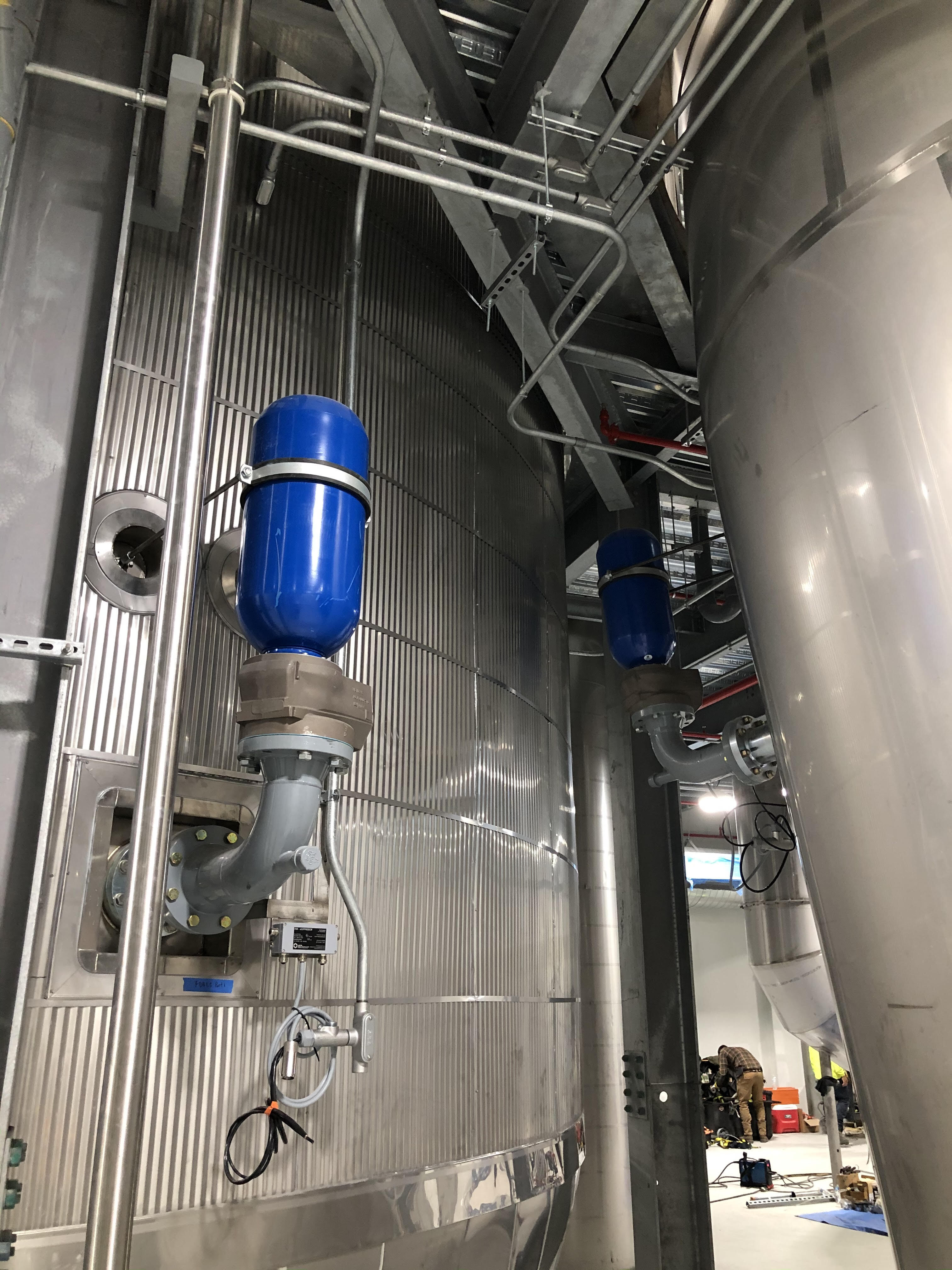
eSUPPRESSOR - Active explosion protection on dryer.
Industrial dust explosions pose an ever-present threat to many branches of the worldwide processing industries. The destructive consequences of such events can lead to business interruption costs, plant destruction, injuries and even fatalities. Various well-established protection measures are commonly used across the globe to mitigate against the industrial explosion risk. One of these methods is Active Explosion Protection. Active explosion protection systems are designed to monitor process conditions to detect deflagrations, and rapidly intervene to suppress developing explosions and prevent them from propagating to interconnected plant and equipment. The first active protection systems emerged over 70 years ago. These systems are generally referred to as explosion suppression and chemical or mechanical based explosion isolation.
Despite the undoubted success of these protection measures in terms of reducing business losses and enhancing personnel safety, certain undesirable consequences have occasionally been associated with active protection, particularly in respect of inadvertent activations. These situations often occur due to process pressure imbalances and the inherent limitations of traditional single point detection-based systems. These nuisance activations create unnecessary downtime, business interruption costs and product/material losses, so as advances in science and explosion protection technology have emerged, new techniques are increasingly being deployed to solve these problems to the clear benefit of users in the processing sector. There are five key areas in active explosion protection where the greatest improvements can be seen.
System Design Methodology
Traditionally, explosion protection system design has been based on a “rule of thumb” approach focusing on calculations made from explosive dust concentration and vessel/equipment volume. However, there are many other process, material and equipment hazard variables that should be considered when designing an explosion protection system. Some of these items include the explosivity characteristics of the combustible dust/vapor, geometry of the vessel, length of agent throw, detection threshold, orientation of the extinguisher discharge plane and efficiency of the agent and discharge nozzles. Considering the effects of these variables will have a significant impact on the system design and calculated reduced pressure after suppression (PRED). Recent developments in computer-based modelling have resulted in design tools which enable a more thorough analysis of the proposed protection scheme for both explosion suppression and explosion isolation systems, based on both optimum and lean dust-air explosions, multiple ignition location scenarios, and suppression agent and extinguisher efficiencies, while taking into account available options in terms of detection modes.
Intelligent Explosion Detection
Historically, explosion detection has been achieved using single fixed set-point pressure sensors requiring field configuration during system set-up. However, these types of detectors can be prone to triggering spurious activations due to unexpected process pressure upsets and unforeseen fault conditions. More recent advances have led to the introduction of programmable dynamic “rate of rise” detectors. The use of dynamic explosion detection as substantially reduced false alarms due to process pressure variations. Some of the more advances dynamic detectors now offered incorporate data capture and memory, which enables application specific programming prior to start up, simulating faulty equipment/components and normal/abnormal process scenarios. A significant benefit of this data capture is the ability to review pressure-time graphs when performing a post event analysis, to confirm the successful suppression and aid in understanding the timeline as the operations team works to determine the source of the ignition.
Addition of Infrared Detection for challenging explosion isolation applications
As a further development of sensing techniques, infrared (IR) detectors are often used, either as a stand-alone device or in combination with pressure detectors, to provide a more effective overall detection solution, especially in challenging applications where it is desirable to optimize the explosion isolation distance on inlet and exhaust ducts. A good example of this is an application of an inlet duct to a large volume handling a product with a relatively low explosivity index. In these situations, the IR detector can provide a secondary level of assurance by identifying a flame which may already be propagating into the duct, ahead of a relatively slow rate of pressure rise which has not yet reached the pressure detection threshold. A combination of IR and pressure detection methods offers greater flexibility in isolation barrier locations, and greater dependability in achieving effective isolation under a wider range of deflagration propagation scenarios.
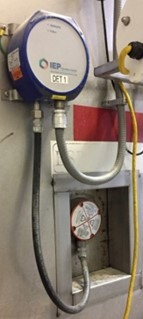
Dynamic explosion detection.
Electromechanical Explosion Suppressors
Perhaps one of the areas where recent innovations in explosion protection techniques are delivering the greatest practical benefits for users is in the development of electromechanical explosion suppressors. In the past, suppressors have employed pyrotechnics to provide the rapid extinguisher activation necessary to suppress an evolving explosion. However, this has meant that these types of suppressor initiators can only ever be subjected to destructive functional testing and are often associated with additional concerns in terms of storage, licensing, and transport. A new generation of explosion suppressors has addressed these issues by replacing pyrotechnics with an electromechanical activation mechanism, which enables the suppressor to be functionally approved in advance and tested in place during maintenance. In fact, these new types of electromechanical suppressors are typically supplied with all necessary certification, including safety integrity level (SIL) rating, hazardous area approval, and TPED and UN-DOT shipping authorization. Furthermore, they achieve safety code compliance by monitoring cylinder pressure and “lock out/tag out” as needed for confined space entry concerns in the protected vessel.
Advances in Control Unit Technologies
In any comprehensive explosion protection solution, all the discreet elements of the system are linked back to a control unit, which provides the “brains” of the system. In recent years, units have progressed from standard single point controllers through to micro-processor based multi-zone units, with the ability to cover up to 32 zones. Some of today’s control units are programmable, have self-testing, with fault and alarm digital display allowing easy diagnostics and correlation. The zoning capability brings very real practical benefits and cost savings to users, offering greater installation flexibility and enabling the related explosion protection measures to be activated selectively. Units also feature a readable memory with date-stamp for analysis as well as incorporating far greater communication capabilities, interfacing with wider process controllers, plant control systems and alarms.
In summary, recent advances in active explosion protection technologies are protecting process, plants, and people in ever more innovative ways, while providing users with greater functionality and practicality, including.
This pace of change is likely to continue as more research and development is focused on this vital area to bring yet more intelligent industrial explosion protection to the worldwide processing industries, with the joint goals of improving safety while minimizing business interruption costs.
About the author:
David Grandaw is Vice President, Sales, with IEP Technologies, part of Hoerbiger Safety Solutions.
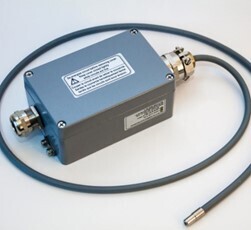
Infrared detector
Summary
Recent advances in active explosion protection technologies are protecting process, plants, and people in ever more innovative ways, while providing users with greater functionality and practicality, including:
This pace of change is likely to continue as more research and development is focused on this vital area to bring yet more intelligent industrial explosion protection to the worldwide processing industries, with the joint goals of improving safety while minimizing business interruption costs.
David Grandaw is Vice President, Sales with IEP Technologies, part of Hoerbiger Safety Solutions. For more information email david.grandaw@ hoerbiger.com.
IEP Technologies - Austria
(HOERBIGER Safety Solutions)
Tel. +43 1 22440 2287
IEP Technologies - Sweden
(HOERBIGER Safety Solutions)
Tel. +46 70 564 3306
IEP Technologies - Finland
Tel. +358 10 325 358 0
IEP Technologies – Switzerland
Tel. +41 62 207 10 10
IEP Technologies – France
(HOERBIGER Safety Solutions)
Tel. +33 (0) 4 90 86 01 01
IEP Technologies – Turkey
Tel. +90 232 484 4412
IEP Technologies – Germany
Tel. +49 2102 5889 0
IEP Technologies – UK
Tel. +44 1242 283 060
IEP Technologies - Italy
(HOERBIGER Safety Solutions)
Tel. +39 045 2370762
IEP Technologies – Latin America
(HOERBIGER Safety Solutions)
Tel. +55 (11) 4446 7400
IEP Technologies – USA
Tel. +1-855-793-8407
IEP Technologies – China
(HOERBIGER Safety Solutions)
Tel. +86 21 6485 0855
IEP Technologies - Korea
(HOERBIGER Safety Solutions)
Tel. +82 10 2579 8077
IEP Technologies - Malaysia
(HOERBIGER Safety Solutions)
Tel. +6012-3783969
IEP Technologies – South East Asia
(HOERBIGER Safety Solutions)
Tel. +65 6890 0770

